A room can be visually stunning-but if the noise overwhelms, the experience is diminished. That’s the subtle power of good acoustics. Poor acoustics deteriorate the experience of a space, placing strain on communication and disrupting clarity. The right acoustic panels do the opposite – bringing balance and transforming echo chambers into functional, enjoyable environments.
Before diving into the right product type for spaces, it's important to understand what acoustic panels actually do. Acoustic panels act as sound absorption, reducing reverberation in a space. They are not to be confused with soundproofing, which stops the transmission of sound between rooms.
In this acoustic panels buying guide, we outline the seven-step framework for choosing the right acoustic panels for any space– transforming rooms into sound havens of relaxation and balance.
Step 1 - Define Your Acoustic Goals
Reduce Echo and Reverberation
Acoustic panels help reduce reflections that amplify background noise and distort speech. It does so by absorbing mid and high frequency sounds, helping to create comfortable environments in open offices, classrooms, and restaurants.
Block Noise Transmission
Acoustic panels are not the same as soundproofing panels. They are designed to improve the acoustics of a space, not block noise transmissions between floors or rooms. For sound insulation, we recommend adding insulated walls and glazing systems.
Set Realistic Expectations
When looking to soundproof a space, it is important to understand what acoustic panels are designed to do. While they greatly improve environments by reducing noise, acoustic panels are not the same as structural sound blocking systems. Instead, they reduce echo and reverberation, not to completely block noise transmission.
Zintra acoustic tiles offer superior sound-absorbing performance compared to traditional acoustic panels. Available in a wide variety of shapes, colours, patterns and depths, they are designed to elevate any space by providing a functional and aesthically pleasing way to significantly reduce noise levels. Their clever construction absorbs sound, improves clarity and minimizes echo and reverberation within a space.


Step 2 – Understand Performance Ratings
What is NRC (Noise Reduction Coefficient)?
The noise reduction coefficient (NRC) looks at how much sound a surface can absorb and measures the echo reduction.
NRC 0.0 = total reflection
NRC 1.0 = total absorption
In some instances, materials can have an NRC higher than 1.0. This is due to the thickness, density or surface geometry enhancing sound absorption across frequencies. For example, Zintra’s PET acoustic panels have an NRC range of 0.75 to 1.5. For most commercial spaces, an NRC between 0.7–0.9 achieves the best performance.
Why Frequency Response Matters
The frequency of a space can vastly change product performance. Two acoustic panels with the same NRC will perform differently in a low-hum office versus a loud cafe. Always check the frequency data to ensure it is compatible with the space size and use.
NRC vs. STC Clarification
Acoustic panels use the NRC marker as they measure echo reduction within a space, whereas walls and insulation use the sound transmission class (STC) to measure sound blocking between spaces.
Tested Standards Matter
Without clear testing data, acoustic panels can fall short. Always check for ASTM and ISO testing to ensure the product is reliable. Zintra acoustic panels are industry-certified and tested across home and commercial applications, ensuring consistency and performance.
Step 3 – Choose the Right Material & Thickness
Materials can change the way acoustic panels perform, varying in aesthetics and sustainability.
Foam Panels
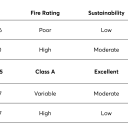
Foam panels are lightweight and inexpensive; however, they have limited NRC, poor durability and often do not pass fire safety testing. Most suitable for hobby or residential spaces.
Fiberglass / Mineral Wool Panels
Fiberglass and mineral wool panels have excellent NRC echo absorption and are long-lasting. However, they typically require professional installation as they are heavier and contain irritants. Used in studios or large venues.
PET Felt Panels (Zintra Style)
PET acoustic panels combine acoustic performance, safety and sustainability into an aesthetic sound-dampening extension of commercial spaces.
Made from 100% recyclable materials
60% post-consumer recycled PET bottles
35% pre-consumer PET chips
5% PLA (polylactic acid), a bio-based material
Class A fire rating for commercial safety
High NRC values for speech and comfort
Available in multiple colors, textures, and formats for architectural expression
Lightweight, durable, and sustainable, Zintra PET panels achieve acoustic control without compromising design intent– leading the way for design freedom balanced with acoustic performance.
Wood and Perforated Panels
Wooden and perforated panels add natural warmth, structured rhythm and visual texture to a space. Commonly found in auditoriums, hotels, or upscale projects, these panels combine aesthetics with sound absorption.
Metal / Perforated Systems
Found in airports or contemporary civic spaces, metal panel systems are durable and precise. However, they are only effective when paired with an acoustical substrate for true sound absorption.
Thickness & Density Considerations
When determining what acoustic panels to use, it is important to understand how thickness and density influence sound absorption. In general, thicker and denser materials can absorb a broader range of frequencies, but effective performance doesn’t always require thicker panels. For example, Zintra Tiles come in ½-1inch options and are engineered to deliver high acoustic performance. This provides an ideal balance of design, aesthetics, and functionality, making them suitable for all commercial spaces.


Quick Material Comparison:



Step 4 – Fire Safety & Compliance
When choosing acoustic panels for commercial spaces, fire compliance is non-negotiable.
Class A Fire Rating
Under ASTM E84, ensure the acoustic panel materials fall under Class A. This ensures flame spread and smoke development are kept at a minimum.
Common Pitfalls
Common mistakes come from selecting cheap, unrated foam or fabric-wrapped panels that have not been Class A certified. These noncompliant products often lead to costly removal and replacement upon inspection, and more critically, they increase the risk of fire. Choosing Zintra’s panels ensures projects are safeguarded and compliant from the start.
Commercial Project Must-Haves
ASTM E84 or UL certification.
Clear documentation for inspectors to reference.
Mounting systems designed for sprinkler clearance and HVAC access.


Step 5 – Aesthetics & Design Integration
Shapes and Colors
From geometric shapes to gentle curves, acoustic panels can change the organic rhythm and flow of a space. Zintra offers a diverse selection of colors, 3D embossing, etching and customizable shapes in recyclable materials – bringing depth, texture and sustainability to commercial spaces.
Acoustic Artwork and Printing
Think of acoustic panels as extensions of architecture. With Zintra’s sophisticated designs—featuring sculptural details, etched patterns, and textural formations—these panels become both functional and artistic elements that elevate any space.
Ceiling Clouds, Baffles, and Hybrid Fixtures
To enhance the acoustics of small spaces or to add visual flair, consider acoustic clouds or acoustic baffles for overhead control. For hybrid installations that combine lighting and acoustics, Zintra panels can be customized to integrate lighting. Projects such as Paypa Planes and Panorama Cellars (in collaboration with another supplier) showcase how bespoke acoustic panel designs can functionally and aesthetically elevate a space.
Real-World Examples
For offices aiming to create a calm and focused atmosphere, neutral tones and simple shapes are often the most effective acoustic solution.
For restaurants, bold suspended ceiling beams and baffles dull echo and have visual flair.
In schools and universities, colorful etch panels or acoustic tiles pair performance with design for engagement and energy.
Step 6 – Installation & Placement
Coverage vs. Placement
Area and distribution dictate the effectiveness of acoustic panels, meaning the more coverage, the better the results. Following Zintra’s Principle of Three, covering three areas such as the ceiling, the rear wall and one side wall, helps bring sound symmetry to a space. As a rule of thumb, aim to treat 15-25% of surfaces for balanced sound control.
Ceilings vs. Walls
Ceiling beams or clouds are ideal in spaces where sound reflects downward, such as high ceilings or hard surfaces typically found in open offices, rooms with glass partitions or hospitality venues. In smaller, enclosed spaces, using both ceiling and wall panels can help reduce echo buildup.
Handling Obstacles
It can be difficult to integrate commercial acoustics in spaces with architectural features, HVAC systems or lighting layouts. Zintra’s design consultation team can provide layout recommendations and architectural panels that work together with architectural design to enhance performance and ensure safety. Zintra Baffles are an effective solution for either concealing ceiling construction or turning it into a design statement—seen here at the William Angliss Institute offices.
Safety and Compliance in Mounting
When mounting acoustic clouds or ceiling beams, always ensure the hardware strength is code-compliant and secure, installing them a safe distance from sprinklers or lighting systems.
Special Cases
In music studios or performance venues, combining Zintra’s acoustic panels with diffusers or bass traps helps achieve full-spectrum sound control.


Step 7 – Bonus Considerations: Sustainability & Wellness
Recycled Content and Green Credentials
Zintra’s PET recyclable panels are leading the way for circularity in acoustic panels.
Each panel is:
60% post-consumer PET bottles
35% pre-consumer PET chips
5% bio-based PLA
This clever composition continues to contribute to LEED credits and support low-carbon goals.
Low-VOC and Formaldehyde-Free
In spaces where indoor air quality is critical, such as hospitals, workplaces and schools, Zintra materials are low-VOC and formaldehyde-free – ensuring wellness and safety standards are met.
Human Wellness Benefits
In spaces with thoughtfully designed acoustics, stress and cognitive fatigue are reduced, allowing occupants to feel calm and focused. A balanced soundscape brings clarity, comfort, and connection—the key foundations of human wellbeing.
Conclusion:
When selecting acoustic panels for commercial spaces, professionals should consider these four primary pillars:
Performance- Confirm that the NRC, frequency response and coverage are compatible with the size of the space.
Safety- Ensure materials have a Class A fire rating and verified installation compliance.
Style- Select forms, finishes and geometric shapes that enhance the intent and purpose of the space.
Sustainability- Opt for recyclable materials that contribute to circularity and reduce environmental impact.
Zintra combines these four principles into a single, forward-thinking solution—where acoustic performance meets architectural beauty.
Explore the full range to see how form and function work in perfect harmony.